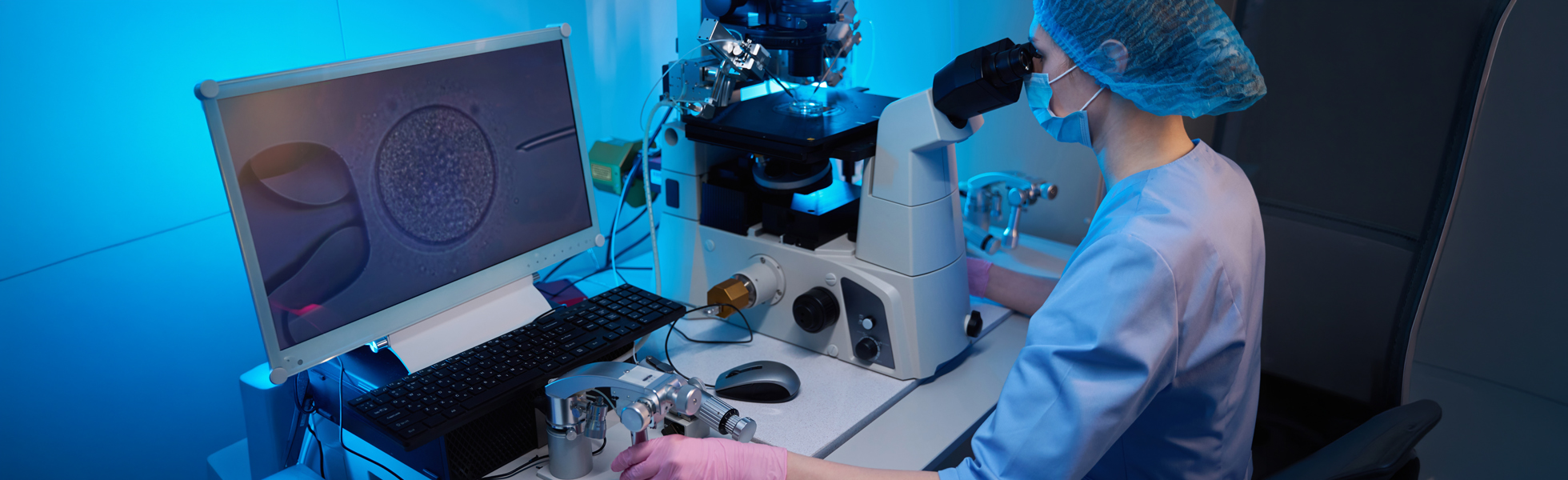
ICSI is a specialised form of IVF often used to help couples and individuals conceive, often where significant male infertility is a factor. It’s also considered when sperm must be obtained surgically from the testicles or epididymis or if you are using donor eggs or sperm that have been frozen and thawed. At your consultation, Dr Ritu will review your fertility profile and advise whether ICSI is your best option to conceive.
The process normally involves six steps and is conducted at Dr Ritu’s rooms and the Genea Fertility lab. Each cycle spans about 4-6 weeks from the start of ovarian stimulation to the pregnancy test after embryo transfer.
Similar to conventional IVF, your treatment begins with hormone medications, usually self-administered by injection, to encourage the ovaries to produce multiple eggs. You’ll be closely monitored with blood tests and ultrasounds so your treatment can be carefully tracked and timed.
Once the eggs are ready, they are collected from the ovaries in a minor procedure, usually performed under sedation or anaesthesia. Recovery takes a day or two, with some people reporting mild bloating or cramping for a few days afterwards.
A semen sample is usually collected on the same day as egg retrieval, although frozen sperm or surgically retrieved sperm may sometimes be used. The laboratory then processes the sample to identify the healthiest sperm, and an embryologist injects a single sperm directly into each mature egg using a fine needle. ICSI is often used when sperm count, movement, or shape may make natural fertilisation more difficult.
The fertilised eggs develop into embryos over several days. The Genea team will track their growth and development closely.
When ready, the healthiest embryo is selected and transferred into your uterus. If you would like to consider PGT, a small number of cells may be biopsied from embryos at day 5-6 of development to help guide selection. The embryo transfer procedure is quick, does not require surgery, and is often described as feeling similar to a pap smear or cervical screening test.
Once transferred, the embryo may take 1-2 days to implant into the uterine lining, and your body may begin producing pregnancy hormones. After approximately 12-14 days, a blood test is taken for the most reliable result. This wait can be stressful for some people, but Dr Ritu will be a steady source of support through this time.
With IVF, the eggs and sperm are placed together and fertilisation occurs in a laboratory dish. With ICSI, an expert embryologist chooses a healthy sperm and injects it directly into a mature, viable egg. It’s a more controlled approach that helps the eggs to fertilise when the sperm isn’t strong enough to do this on its own.
Just like IVF, there are some key factors that determine the success of ICSI treatment:
Injecting a single healthy sperm into a mature egg helps increase the chance of fertilisation. This procedure is valuable as many eggs won’t fertilise when sperm count is low, movement is poor or shape is abnormal.
This targeted approach can achieve fertilisation when there are fewer sperm available such as when they are obtained surgically from the testicles or the epididymis.
ICSI can help where previous IVF cycles have failed, meaning more options, fewer wasted cycles, and a better chance of success.
Like IVF, ICSI is generally considered safe, though there are some risks involved. These include physical risks linked to fertility medications and the egg retrieval process, and pregnancy-related risks such as premature birth and low birth weight. There’s also a small risk of egg damage during the ICSI procedure itself. Requiring multiple cycles can also pose emotional and financial challenges.
Dr Ritu will ensure you are aware of potential risks and what can be done to mitigate them, helping you achieve the best possible outcome.